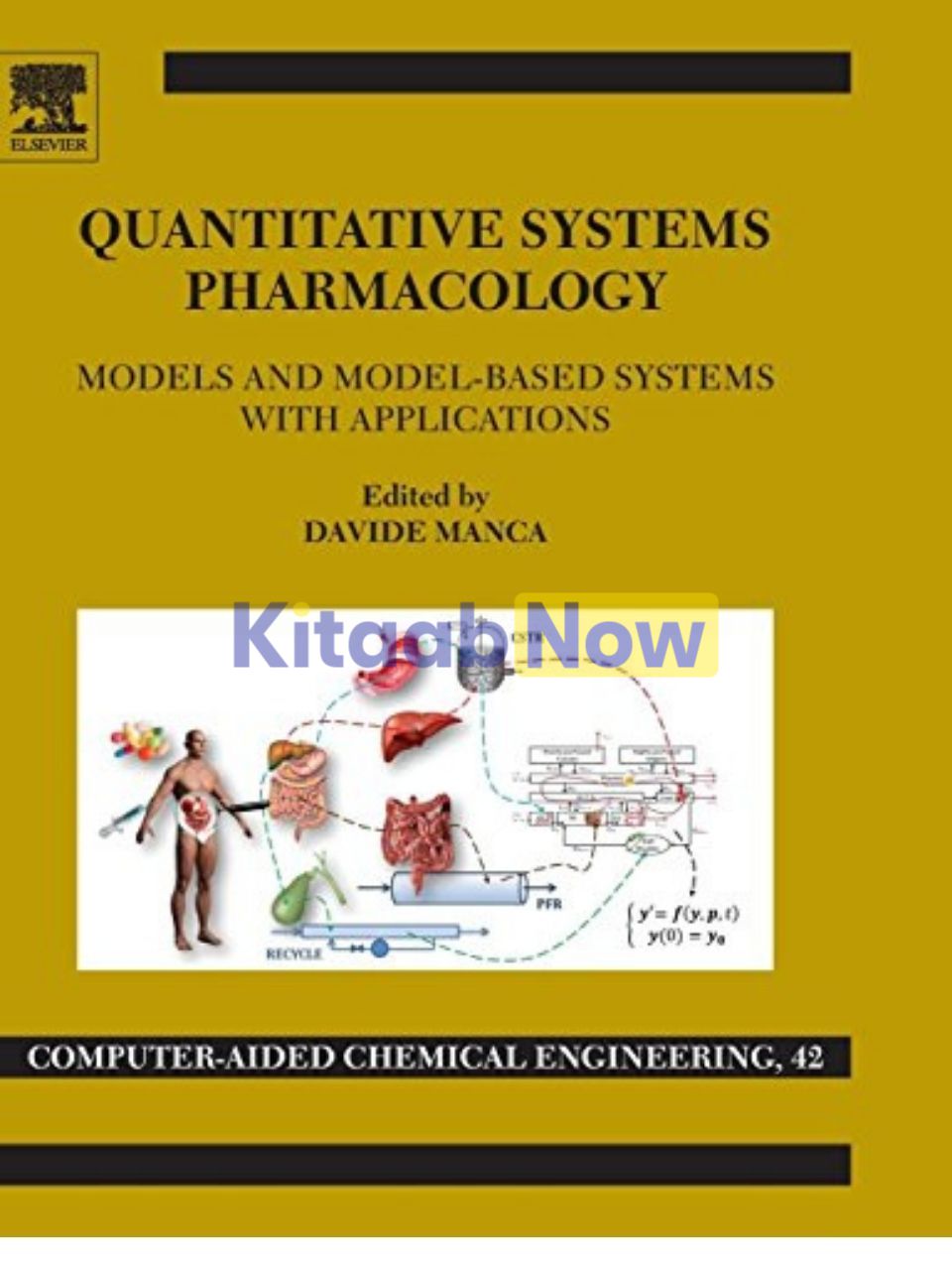
Quantitative Systems Pharmacology: Volume 42: Models and Model-Based Systems with Applications
Nutritive
$ 94.22
DescriptionQuantitative Systems Pharmacology: Models and Model-Based Systems with Applications, Volume 42, provides a quantitative approach to problem-solving that is targeted to engineers. The book gathers the contributions of doctors, pharmacists, biologists, and chemists who give key information on the elements needed to model a complex machine like the human body. It presents information on diagnoses, administration and release of therapeutics, distribution metabolism and excretion of drugs, compartmental pharmacokinetics, physiologically-based pharmacokinetics, pharmacodynamics, identifiability of models, numerical methods for models identification, design of experiments, in vitro and in vivo models, and more.As the pharma community is progressively acknowledging that a quantitative and systematic approach to drug administration, release, pharmacokinetics and pharmacodynamics is highly recommended to understand the mechanisms and effects of drugs, this book is a timely resource.Table of ContentsQuantitative systems pharmacology: Extending the envelope through systems engineeringAn engineering oriented approach to physiologically based pharmacokinetic and pharmacodynamic modelingAdvanced Techniques for the Optimal Design of Experiments in PharmacokineticsOn the Identifiability of Physiological Models: Optimal Design of Clinical TestsBayesian hierarchical modeling of gabapentin absorption and disposition with application to dosing regimen assessmentComputational tools in the assistance of personalized healthcareMultiscale models for transport and biodistribution of therapeutics in cancerQuantitative systems pharmacology on cancer drug delivery to target sites: Application of chemical engineering toolsSystems engineers’ role in biomedical research. Convection-enhanced drug deliveryOn the modeling of oral drug deliveryDrug delivery from polymeric matricesModeling the mechanics and the transport phenomena in hydrogelsEditor BiographyDavide Manca received the M.Sc. in 1990 and the PhD in 1994, both on “Chemical Engineering” at Politecnico di Milano (POLIMI, Italy). He is professor of Process Systems Engineering and head of the PSE-Lab at POLIMI since 2002.He is (co)author of more than 210 peer-reviewed publications on international journals and conferences with a few book chapters.In more than twenty years of academic employment, he conjugated research activityand industrial advice to make these worlds better interact and get benefit from their mutual collaboration. At the basis of Davide’s research is the modeling activity that has the quantification of what is analyzed as the final target. Design, simulation, control, optimization, and assessment are the main features that use computer algorithms and methods to produce the quantification of phenomena, processes, and plants.Davide has taught Numerical Calculus, Dynamics and Control of Chemical Processes,Process Systems Engineering. He has been the supervisor of tens of students involved in the bachelor, master, and PhD degrees.He was founder and director of R&D and Engineering department at Virthualis, a spin- off company of POLIMI, working on operator training simulation in 3D immersive virtual environments.Under his direction, PSE Lab has worked on a number of European and Italian research projects with a fruitful collaboration with international universities and companies.