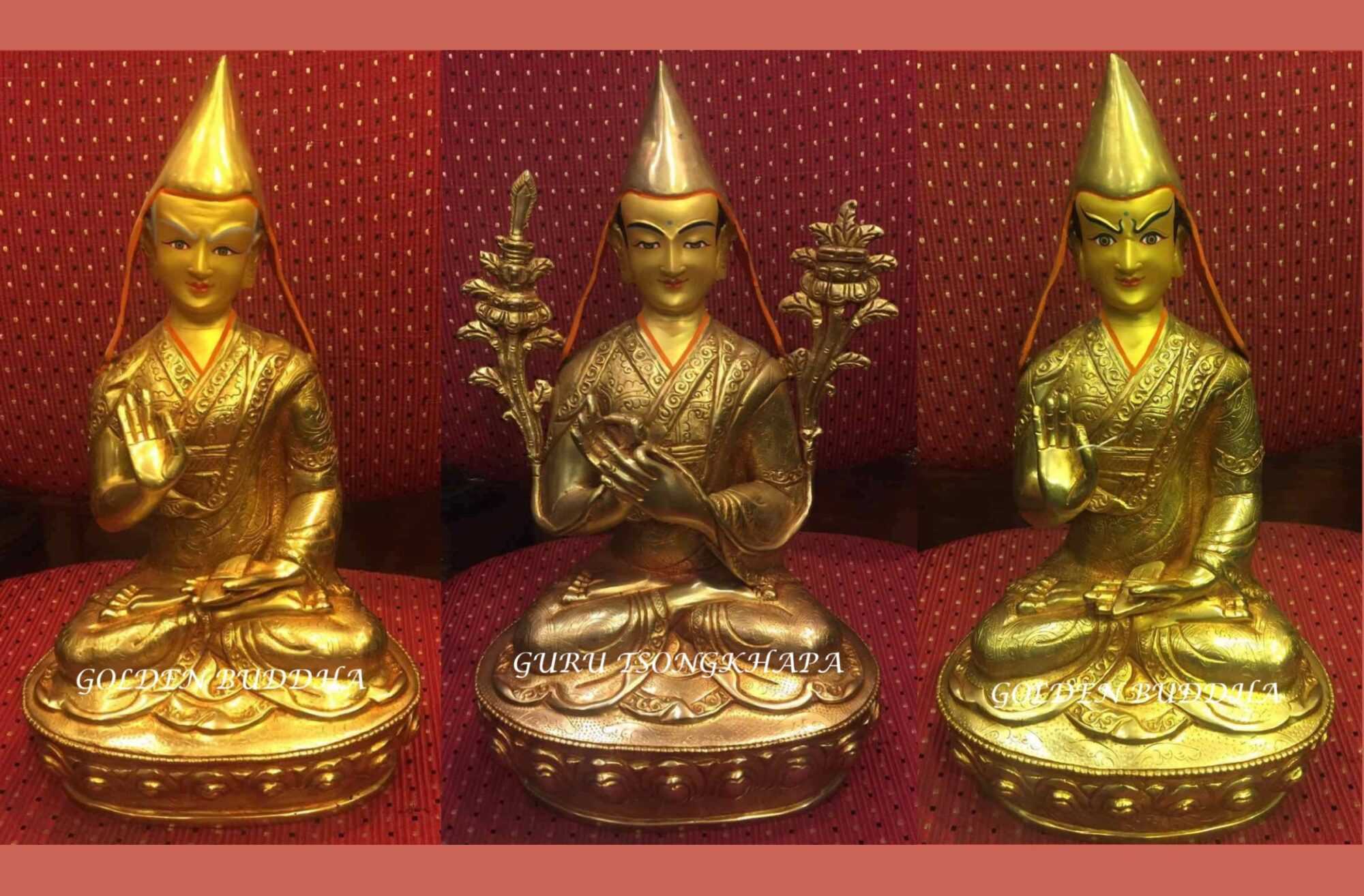
Je Tsongkhapa Statue Set 26cm | Gelug Trio, 24K Gold Gilded
Nutritive
$ 93.22
This 32cm (Je Tsongkhapa trio) statue set is fully fire gilded in 24K gold — all three figures handcrafted in Patan, Nepal using the traditional lost wax sculpting method with hand-painted faces. At 32cm this is a substantial altar set: each of the three figures is large enough to be individually distinct and iconographically legible, making this the right scale for a Dharma center, monastery shrine room, or a dedicated home altar where the trio is intended as the centerpiece. Have questions about Guru Tsongkhapa statues? Read our Guru Tsongkhapa FAQ, covering iconography, the Gelug school, and choosing the right statue for your altar.Je Tsongkhapa stands at the center as the founding father of the Gelug school of Tibetan Buddhism and a revered emanation of Manjushri — the Bodhisattva of Wisdom. His disciples Gyaltsabje and Khedrubje flank him: Gyaltsabje as an emanation of Avalokiteshvara (compassion) and Khedrubje as an emanation of Vajrapani (power). Together the trio embodies the complete qualities of enlightened mind — wisdom, compassion, and power — incarnated as historical human teachers within the Gelug lineage. Tibetan Buddhist tradition holds that Shakyamuni Buddha prophesied Tsongkhapa’s appearance — that an emanation of Manjushri would arise in the Land of the Snows, establish a joyful land, and serve as its protector. That joyful land is Ganden Monastery (dGa’-ldan), founded by Tsongkhapa in 1409 CE near Lhasa, the mother monastery of a tradition that continues today under the spiritual leadership of the 14th Dalai Lama.Je Tsongkhapa Statues Set FeaturesAll three figures wear the yellow pandita hat distinctive to the Gelug school — the scholar’s hat inherited from the great Indian Buddhist monastic university tradition, marking each figure as belonging to the lineage Tsongkhapa founded — and the robes of fully ordained Buddhist monks. Tsongkhapa at the center displays the Dharmachakra mudra — the Wheel of Dharma gesture — with the sword of wisdom rising from the lotus over his right shoulder and the Prajnaparamita Sutra resting in the lotus over his left. His two disciples each raise their right hand to heart level in the Vitarka mudra — the gesture of expounding and transmitting the Dharma — while their left hands rest in the Dhyana mudra of meditative absorption. The disciples’ mudras reflect their roles precisely: they are teachers actively transmitting what they have received, grounded in the meditative realization that underlies the teaching. Certificate of authenticity Authentic, Handmade in Nepal Every statue and ritual item is handcrafted in Patan, Nepal, using traditional lost wax casting and comes with a certificate of authenticity issued by Nepal's Department of Archaeology, verifying its materials, technique, and origin. Learn more about our certification